Many people miss the early signs of hearing loss because the changes happen gradually. You don’t wake up one morning unable to hear. Instead, you start adapting without realizing it. A conversation feels harder to follow. The television volume creeps up. Someone seems to be mumbling more than they used to.
What you’re noticing are the symptoms of hearing loss, not the hearing loss itself. Once hearing loss occurs, it generally cannot be reversed. That’s why recognizing the earliest signs matters. According to the National Institute on Deafness and Other Communication Disorders (NIDCD), age-related hearing loss often develops so gradually that people may not realize they’ve lost some of their ability to hear.1
The Symptom Most People Explain Away
One of the first signs of hearing loss is difficulty understanding speech, especially in busy places.
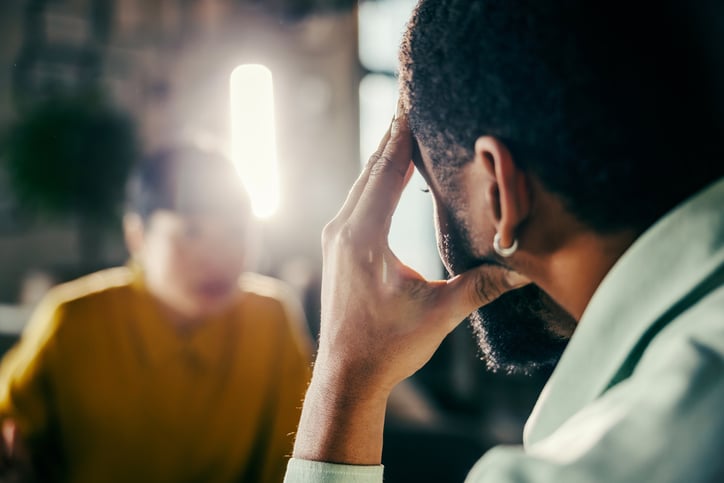
Maybe you’re at a favorite restaurant in the Cape Region and find yourself nodding along because following the conversation takes more effort than it used to. It’s easy to blame the room, the background noise or the acoustics.
Sometimes those things are part of the problem. Sometimes they’re also the first clue that certain speech sounds are becoming harder to hear.
When Everyone Else Seems To Be Mumbling
This is another common early symptom.
People often say things like:
- “Everyone talks too fast these days.”
- “People don’t speak clearly anymore.”
- “I can hear them, I just can’t understand them.”
The distinction matters. Hearing loss frequently affects higher-pitched speech sounds first. You may hear a voice but miss parts of the words. The brain fills in the gaps when it can. Eventually, those gaps become harder to ignore.
The TV Volume Keeps Going Up
Most people don’t notice this change in themselves.
A spouse or family member usually does.
You may increase the volume a little at a time over several years. Because the adjustment is gradual, it never feels dramatic. Yet this is one of the most recognizable warning signs of hearing loss in older adults and often shows up long before someone seeks help.
Can Hearing Loss Feel Like A Concentration Problem?
Yes. Untreated hearing loss can make conversations mentally exhausting because your brain has to work harder to fill in missing sounds.
Some people assume they’re distracted, tired or losing focus when the real issue is that listening requires far more effort than it once did.
At What Age Should Adults Start Getting Regular Hearing Tests?
Many hearing care professionals recommend establishing a baseline hearing evaluation around age 50, even if you haven’t noticed symptoms.
A baseline provides a point of comparison so subtle changes can be identified earlier and monitored over time.
Why Early Treatment Matters
Recognizing hearing loss early is about more than hearing better.
Research funded by the National Institutes of Health found that hearing aids correlated with reduced dementia risk in a study of 500K+.2 While hearing treatment isn’t a cure for cognitive conditions, the finding highlights how important hearing health can be to overall well-being.
Small changes matter. Catching hearing loss earlier often allows for more options, better communication and less frustration in everyday life.
If you’ve noticed any of these signs, a hearing test can provide clear answers. At Cape ENT, hearing evaluations help establish a baseline and identify changes that may otherwise go unnoticed. For many adults, beginning regular hearing testing around age 50 offers the best opportunity to track hearing health over time and respond before communication difficulties become more disruptive.
Sources
1 National Institute on Deafness and Other Communication Disorders. “Age-Related Hearing Loss (Presbycusis).” https://www.nidcd.nih.gov/health/age-related-hearing-loss
2 National Institutes of Health. “Hearing Aids Slow Cognitive Decline in People at High Risk.” https://www.nih.gov/news-events/nih-research-matters/hearing-aids-slow-cognitive-decline-people-high-risk